Lifting the weight of stigma
Low-barrier, peer-led harm reduction support for people using performance and image enhancing drugs.
In May 2026, BHN launched a Performance and Image Enhancing Drugs (PIEDs) peer harm reduction program. The program responds to growing demand for practical, non-judgemental support for people who use steroids, peptides, Selective Androgen Receptor Modulators (SARMs), human growth hormone and other performance and image-enhancing drugs.
“We saw a gap in service delivery for people using performance and image enhancing drugs, so our AOD Harm Reduction team designed this program in response,” says Harm Reduction Practitioner Henri Santoro. “It strengthens BHN's role as an early community health response to emerging concerns around use.”
Developed in partnership with people with lived and living experience, the innovative program recognises that many people who use PIEDs do not identify with, or feel comfortable accessing, traditional alcohol and other drug services. Rather than focusing on abstinence, the model supports individuals to reduce harm, improve health monitoring and access healthcare aligned with their personal goals, whether or not they wish to reduce or cease PIED use.
When I was using PIEDs, I wish I'd had more help understanding how my use could affect my health and what I could do to look after myself.
That's why I want people to be able to ask questions openly, make informed decisions and feel supported without judgement, whatever they decide.
– Henri Santoro, BHN Harm Reduction Practioner.
The program offers peer-informed harm reduction support including:
- Safer injecting information
- Sterile equipment access
- Health monitoring guidance
- Help navigating referrals to PIED-informed clinicians
- Information on side effects and counterfeit product risks
- Support coming off, if desired.
It doesn’t provide cycle planning, dosing advice or prescriptions – the focus is on health, harm reduction and connection to supportive services.
The program brings together direct peer support, practical resources, workforce education and secondary consultation in an integrated approach to address a health issue too often misunderstood. Unlike approaches that focus solely on individual support, the program also builds workforce capability so that workers can respond more confidently to emerging PIED-related harms. Feedback from clients directly shapes training and resources, while questions from workers help identify where clearer guidance, clinical input or referral pathways are needed.
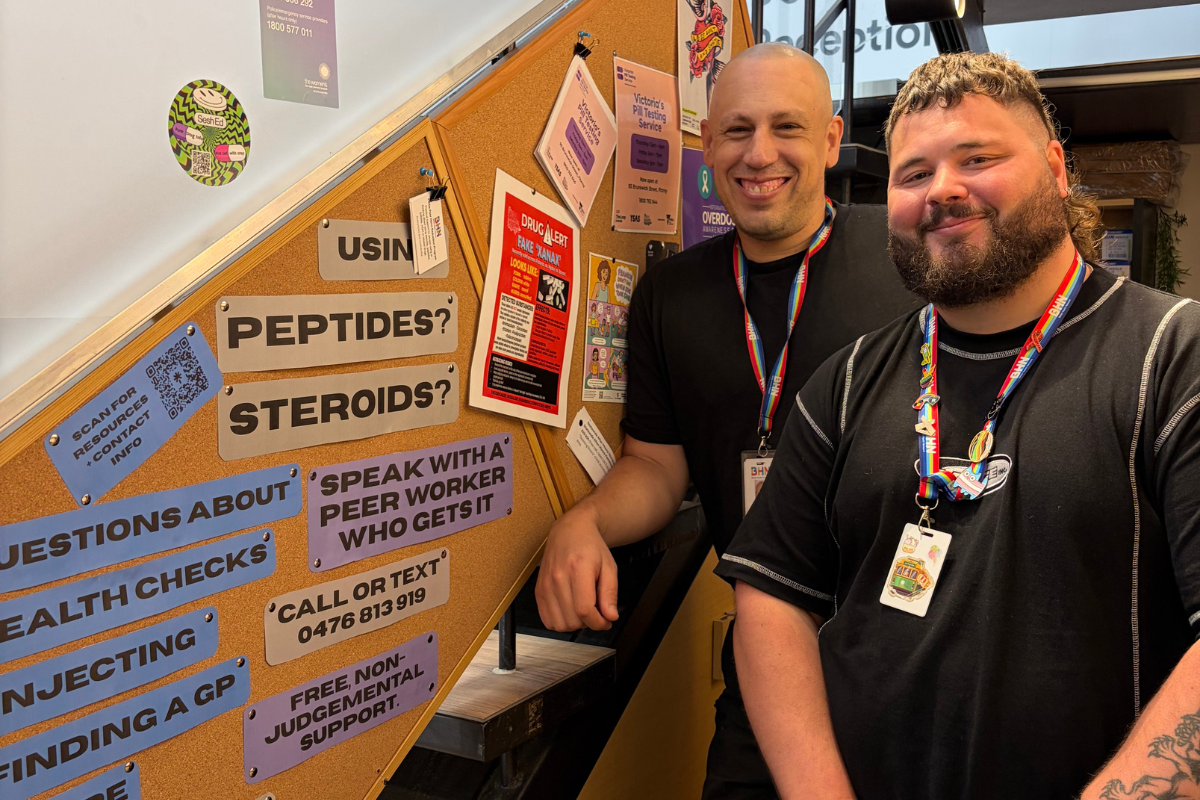
Between 1 May and 18 August 2026, 61 client contacts were recorded, and we supported people through our Prahran needle and syringe program, phone and text message support and outreach. Through the program, people were supported to improve injecting practices, complete health checks, engage with GPs and seek medical care when required.
When the Victorian Department of Health issued an alert about acute liver injury linked to unapproved products labelled as retatrutide, the program translated the warning into plain-language harm reduction information and shared it through service and peer networks, helping ensure that critical safety information reached people who may have been at risk.
Early follow-up data demonstrates meaningful changes in health behaviours and healthcare engagement. Clients reported completing blood tests, attending GPs and urgent-care services, adjusting injecting equipment or techniques, clarifying prescribed dosing, switching to safer preparation methods, discarding products of uncertain quality and seeking further medical review when risks were identified.
The data also identified a need to strengthen engagement with women, who represented one in six client contacts. In response, BHN engaged a female harm reduction worker with lived experience and specialist PIED knowledge to review resources and support women accessing the program, alongside the development of a peptide resource specifically for women.
Alongside enquiries relating to steroids, the service received enquiries concerning unprescribed GLP-1 products, anxiety about weight, body-image concerns, and possible eating disorder or muscle dysmorphia issues. These presentations reinforced the need for the program to address a broader range of experiences than traditionally associated with male steroid use.
Although still in its early stages, the PIEDs peer harm reduction program is demonstrating strong potential as a scalable model for community health harm reduction support. By combining direct peer support with workforce development, secondary consultation and responsive resource development, the program is improving health outcomes, strengthening service responses and helping to lift the weight of stigma for people who use PIEDs.